Sprint & Boost

Transformation — modernizing Sprint.com and Boostmobile.com with a unified system
Role: Director of UX & Design Scope: Team build, unified design system, experimentation pipeline, process + governance Timeline: 2018 – 2021 Environment: Sprint.com + Boostmobile.com, Adobe AEM, Adobe Analytics, cross-functional digital org

Sprint’s digital channel needed a full reset: unify two large consumer properties (Sprint + Boost), modernize the experience, and build a repeatable system for experimentation and iteration — while the organization was changing and preparing for merger realities. The mandate was clear: build a team, update tools and technology, simplify and unify the design system, and make the work measurable and scalable.

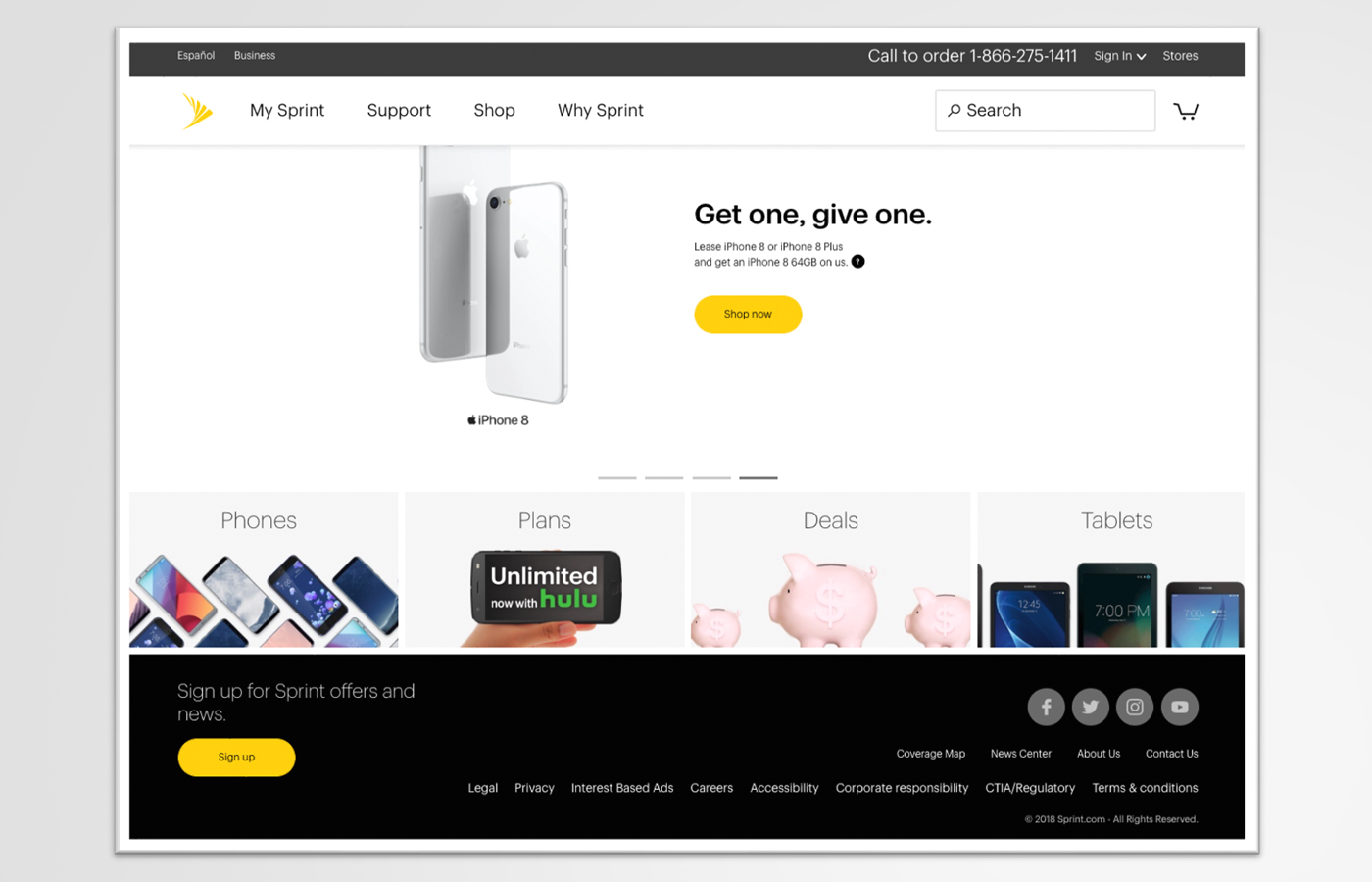
Sprint.com and Boostmobile transformation overview

From legacy ecommerce to a modern, testable digital system.

The work focused on building a unified design + delivery model that supported automation, segmentation, personalization, and testable iterations — so improvements could ship continuously with confidence, not as one-off redesign events.

01

Built and scaled the Design Innovation team

Hired and organized a team of UX designers, researchers, and writers, and introduced shared rituals and artifacts that made UX accessible across business verticals. The goal was alignment under change: clear objectives, reliable process, and a durable operating model.

02

Unified Sprint + Boost into one design system

Simplified and unified common components across Sprint.com and Boostmobile.com to reduce production cost and friction, and to make future work consistent, reusable, and easier to govern.

03

Operationalized test-and-learn as a first-class capability

Established an experimentation mindset where a design system supported A/B testing and controlled rollouts — enabling micro-improvements in conversion KPI and creating repeatable, documented paths for shipping innovations and experiments.

Sprint.com legacy state (before)
01 / Initial state — legacy layouts and fragmented patterns
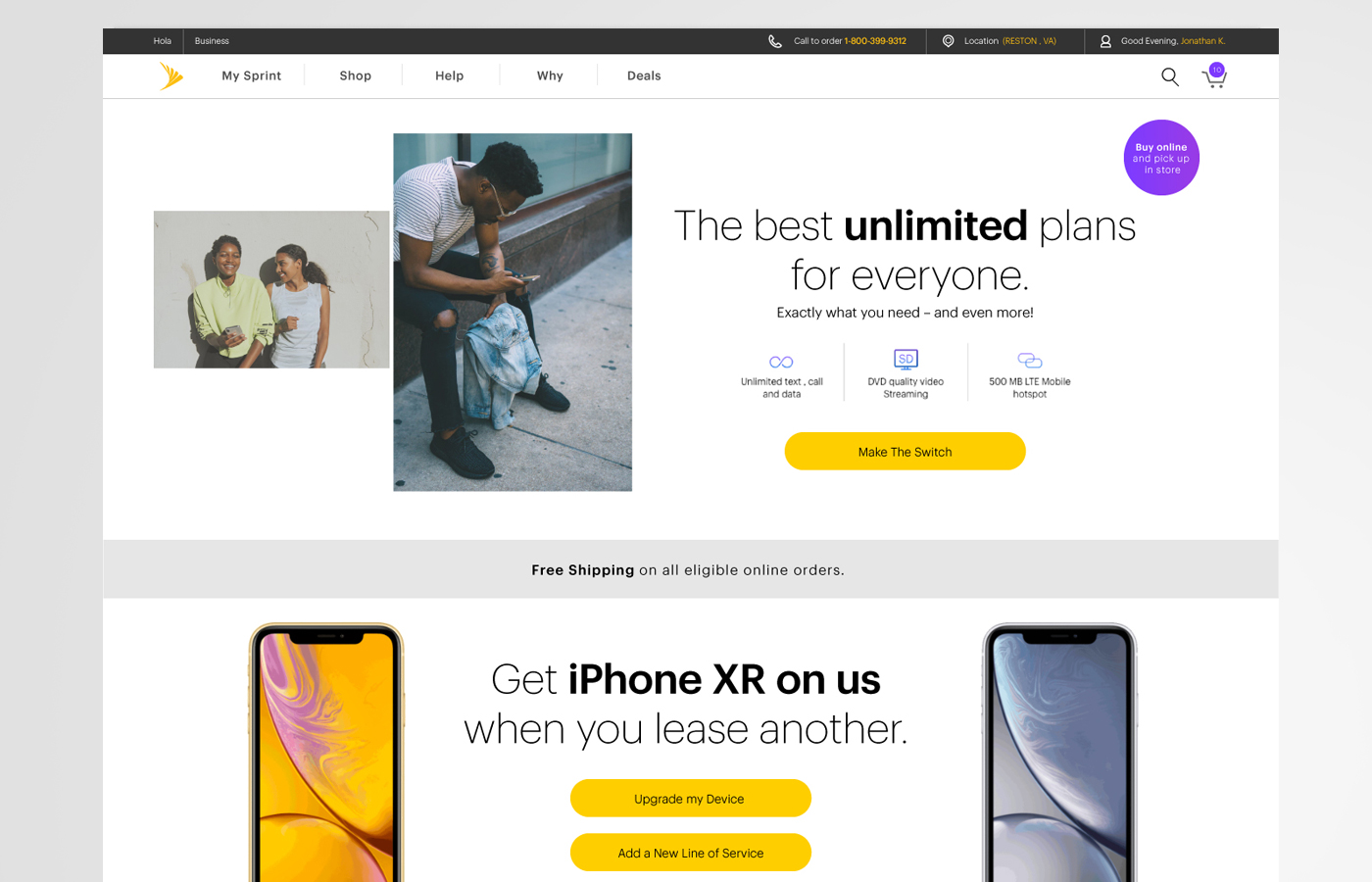
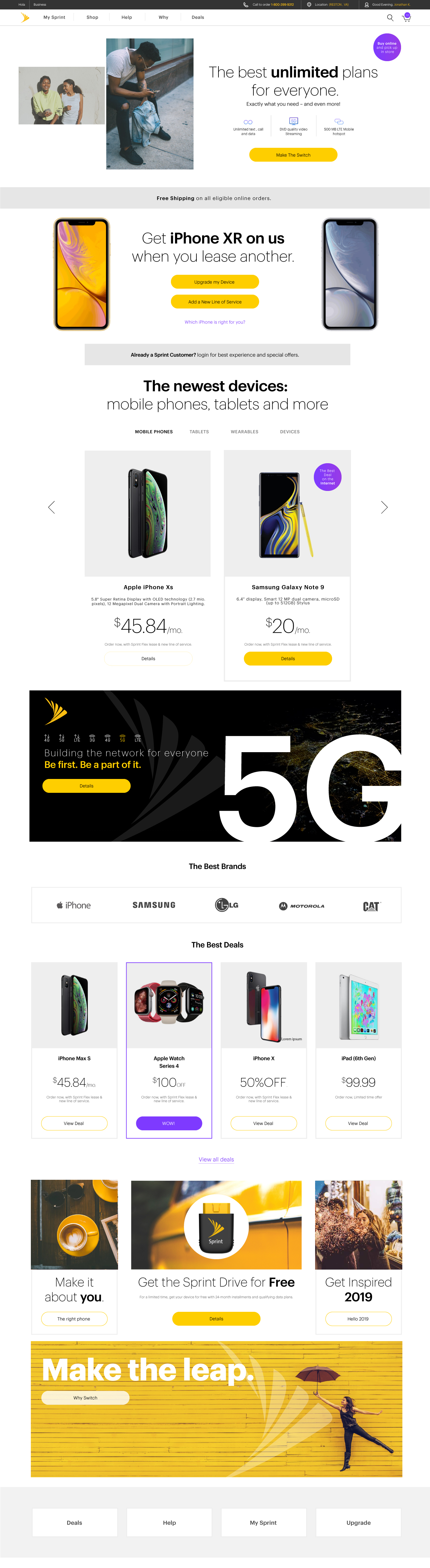
Sprint.com modern state (after)
02 / After — modernized, modular, and optimized for iteration
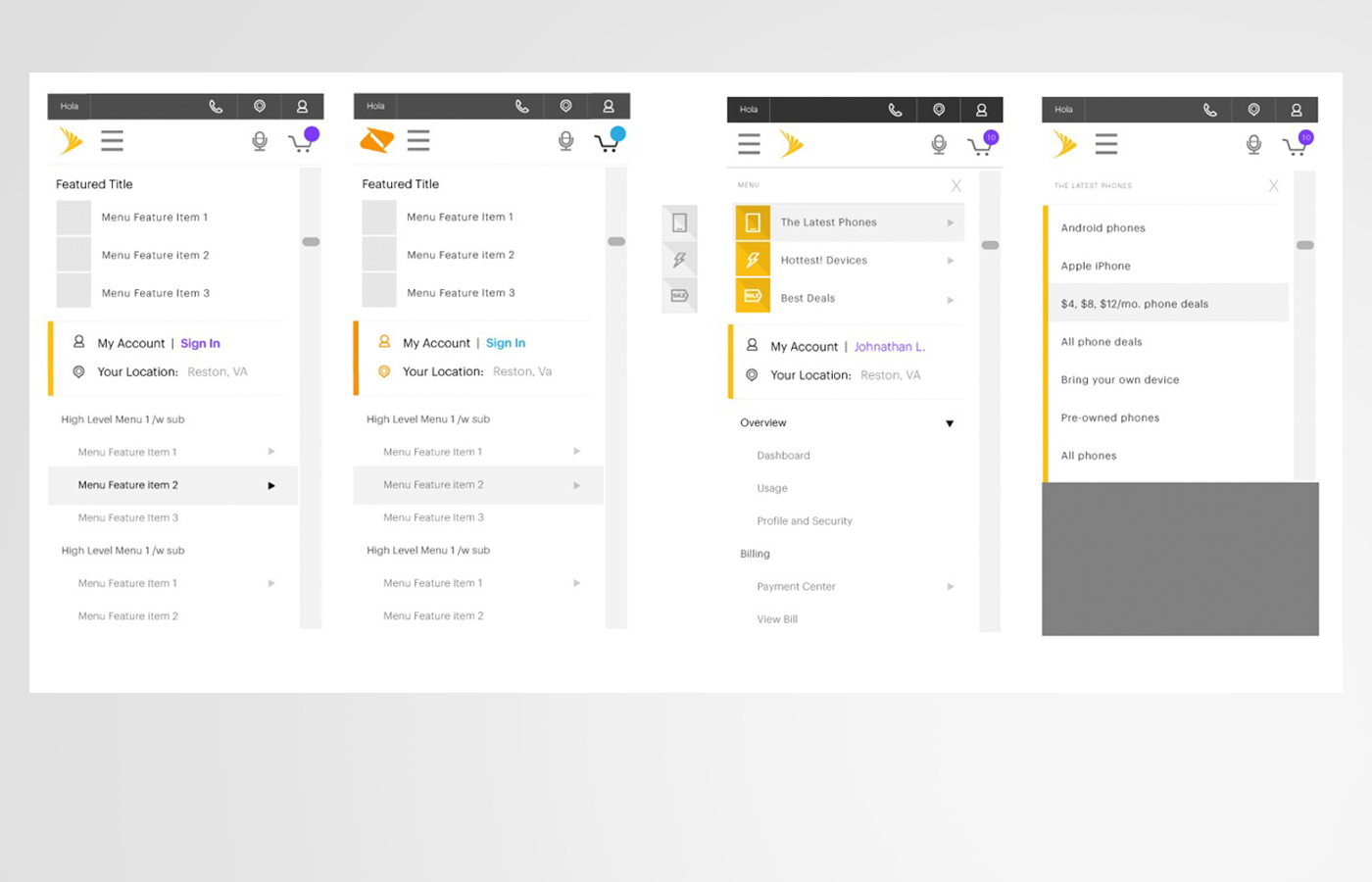
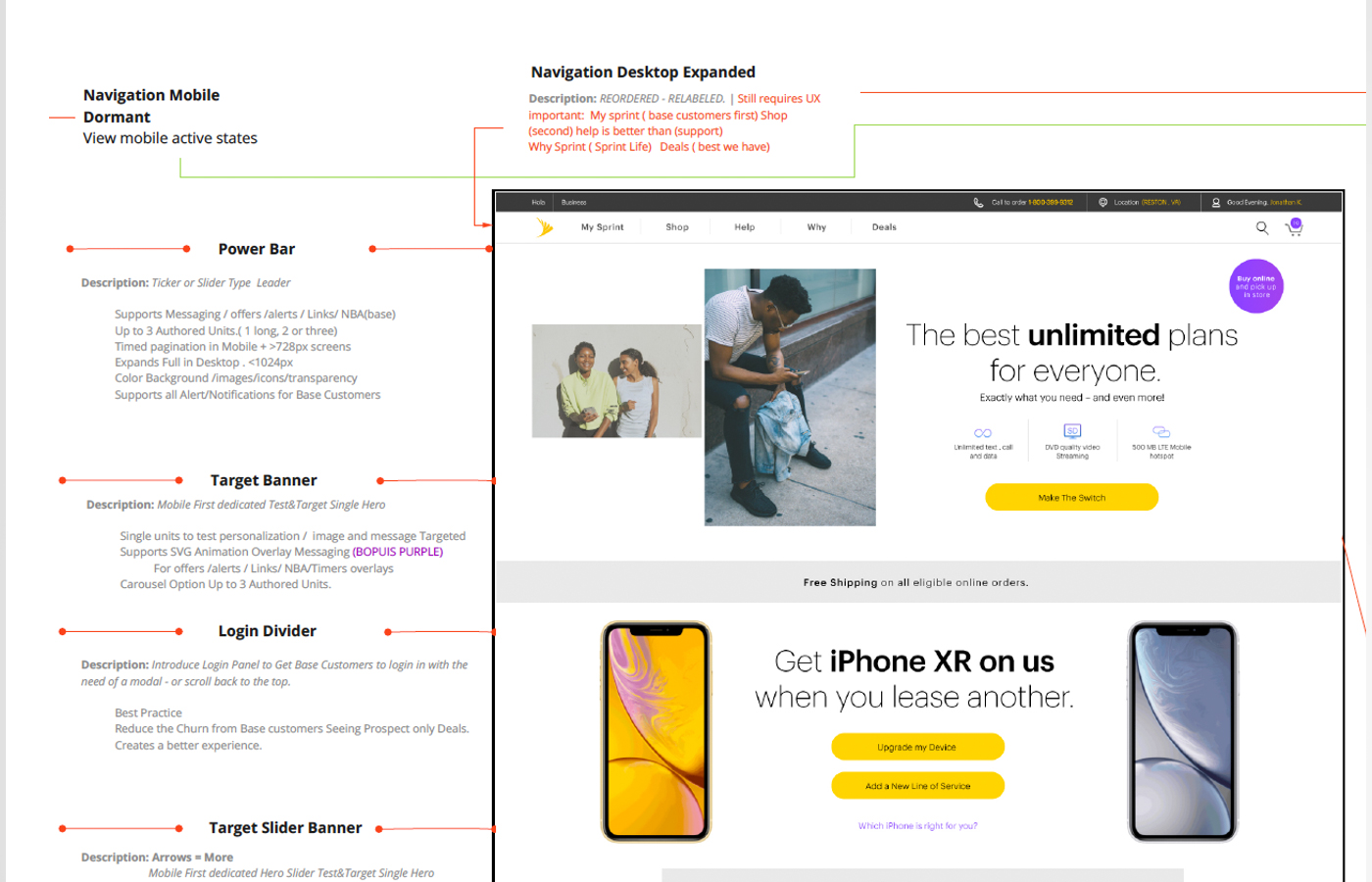
Common core components
03 / Common core components — unified system for Sprint + Boost
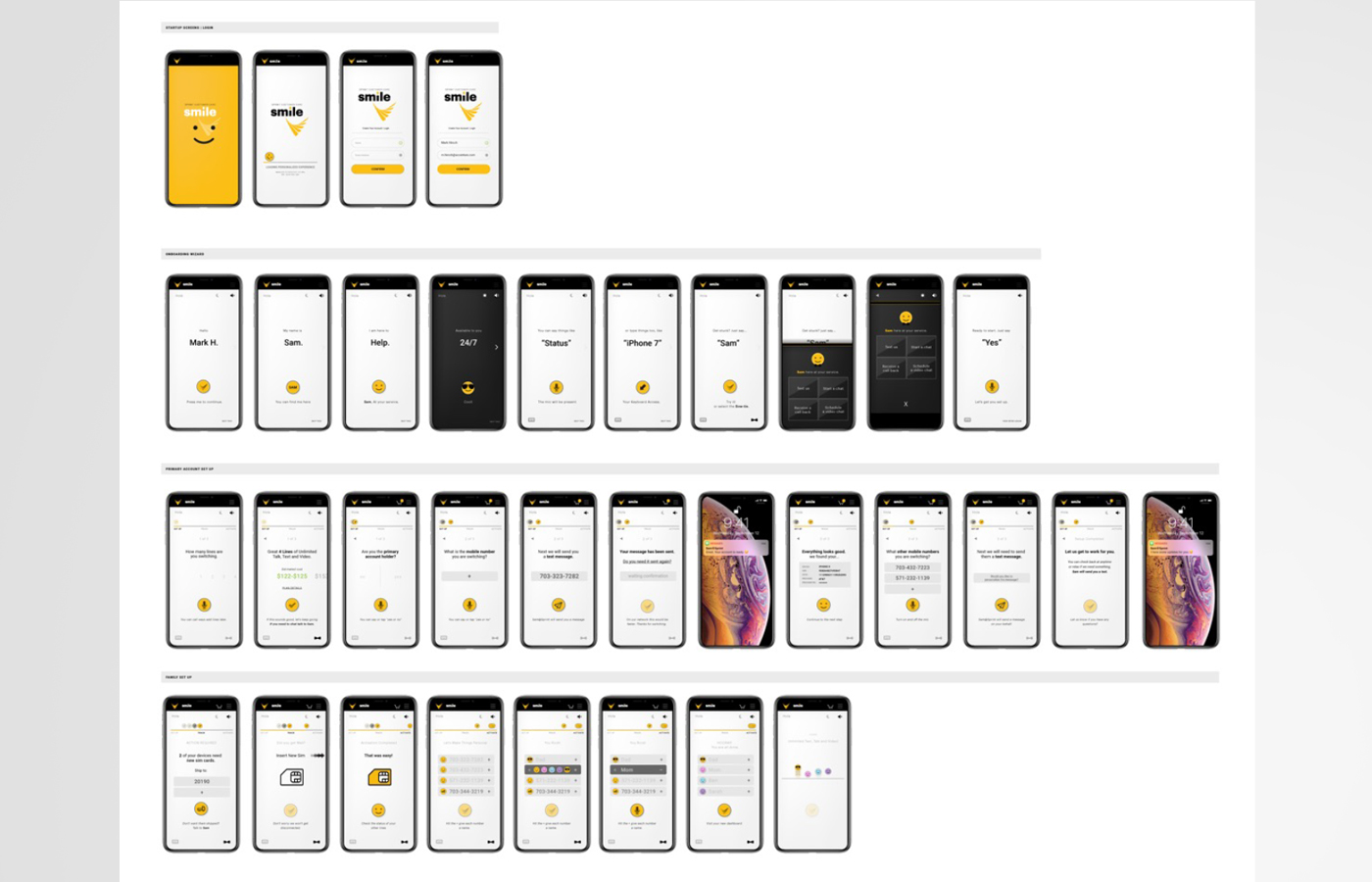
Mobile-first patterns
04 / Mobile-first design — patterns built to scale
Experimentation and analytics workflow
05 / Test-and-learn — analytics-driven iteration loops

Built the system, then rebuilt how work ships.

Alongside experience modernization, the work included updating tools and governance: migrating the team from Sketch to Figma, creating a dedicated DAM to archive historic content, achieving SOC compliance for the UX & Design team, and aligning design system outputs to Adobe AEM and Adobe Analytics constraints.

Key constraints
  • Large-scale cross-functional dependencies
  • Legacy IA and inconsistent patterns
  • Experimentation and measurement requirements
  • Tooling + governance updates (Sketch → Figma, DAM, compliance)
  • Alignment to Adobe AEM authoring and Adobe Analytics instrumentation
Key outcomes

These outcomes reflect system-building under real operational constraints — tools, governance, measurement, and multi-team delivery.

3-year roadmap

Curated a 3-year product roadmap over a six-month planning window, giving teams a shared north star and sequencing for modernization work. :contentReference[oaicite:6]{index=6}

Sketch → Figma

Migrated the organization’s design workflow from Sketch to Figma and stood up a dedicated DAM to preserve historic assets, while improving repeatability and collaboration across teams.

SOC compliance

Achieved SOC compliance for the UX & Design team as part of strengthening governance and operational maturity.

Testable system

Built a design system designed for A/B testing and controlled rollout, enabling repeatable, documented experimentation and data-informed iteration.

Final thoughts

This case study focuses on systems and process outcomes — team structure, design system unification, and measurable delivery. Screens and artifacts are representative and may be selectively shared due to confidentiality.

final design