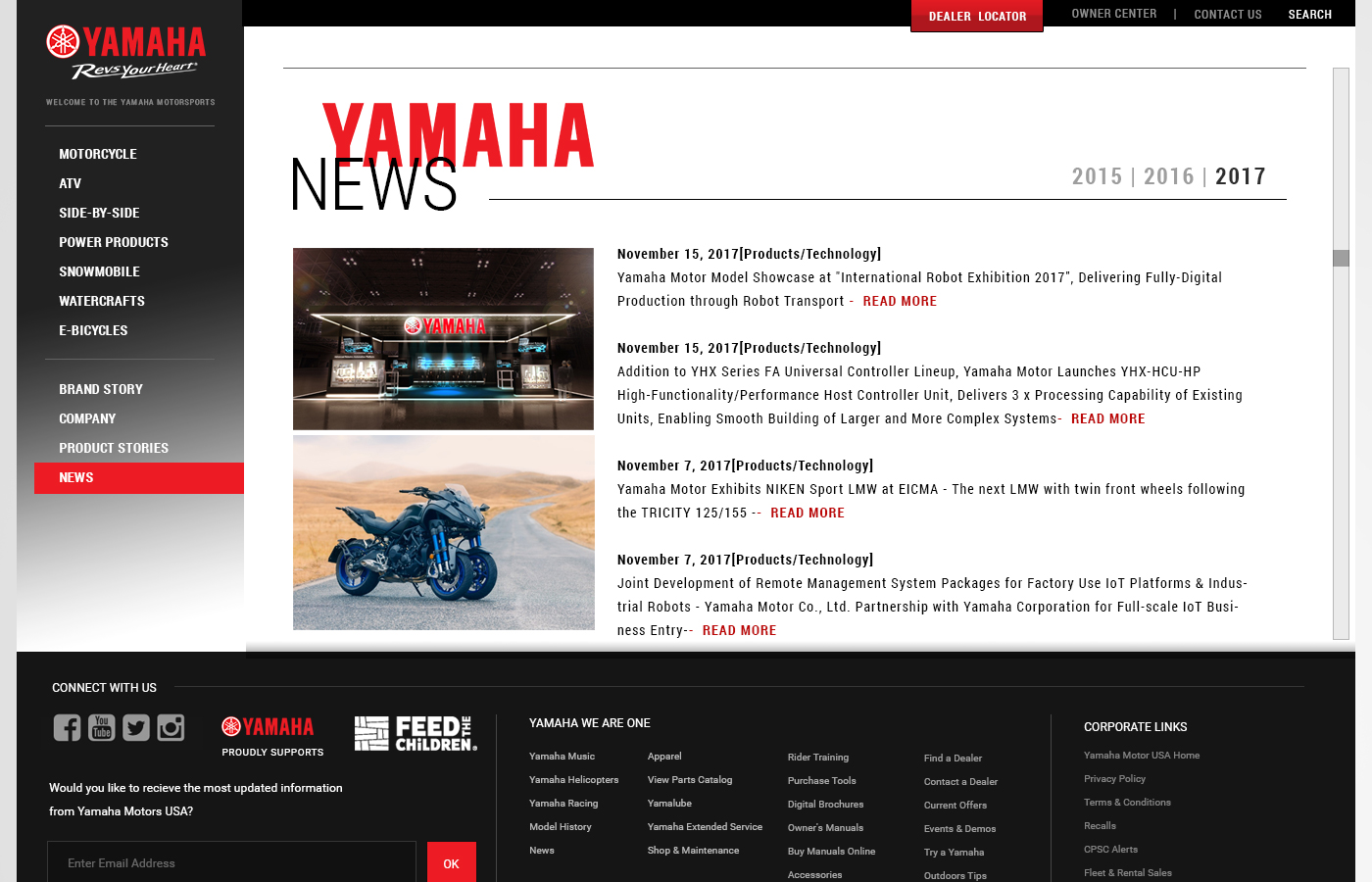
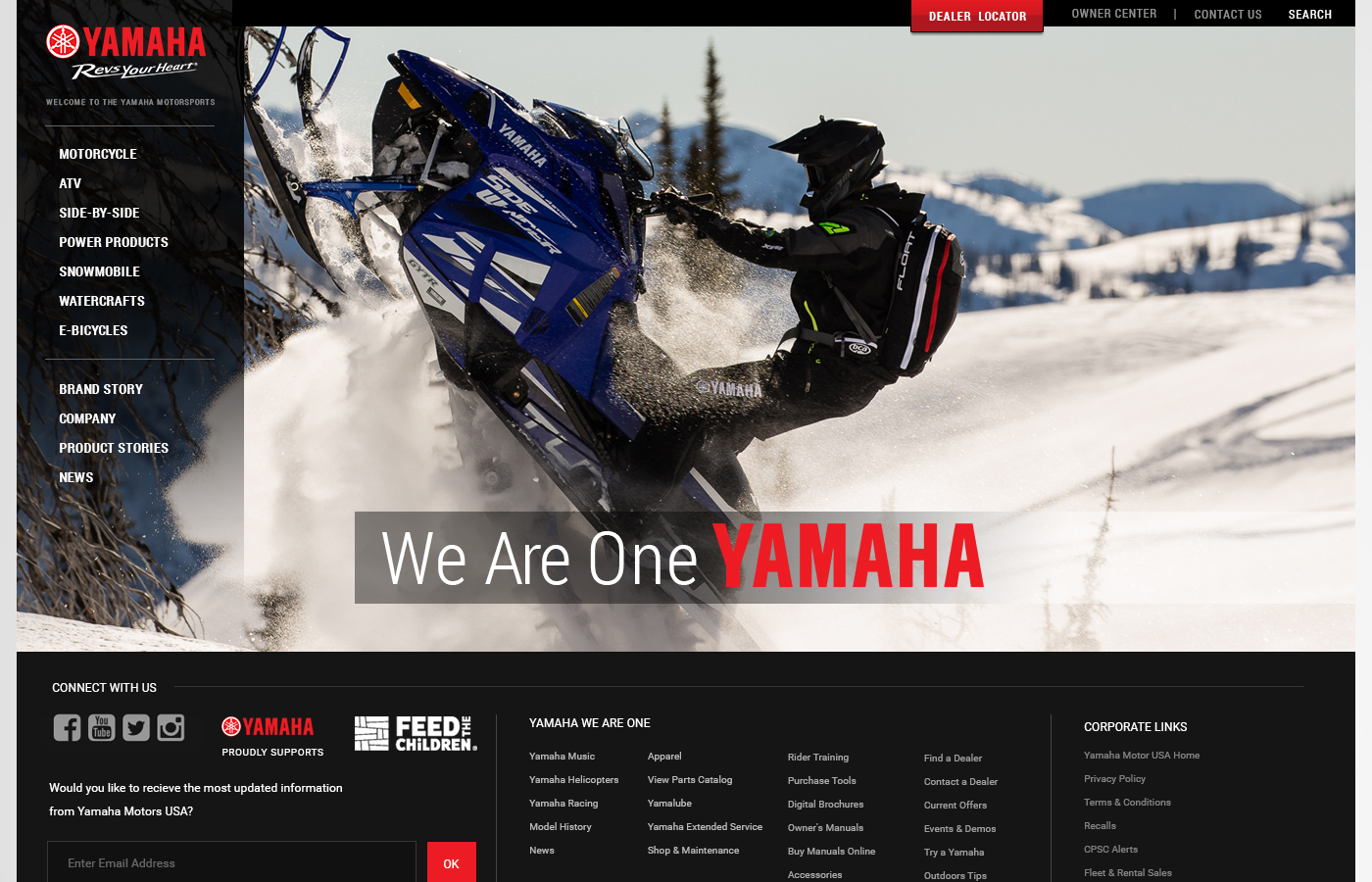
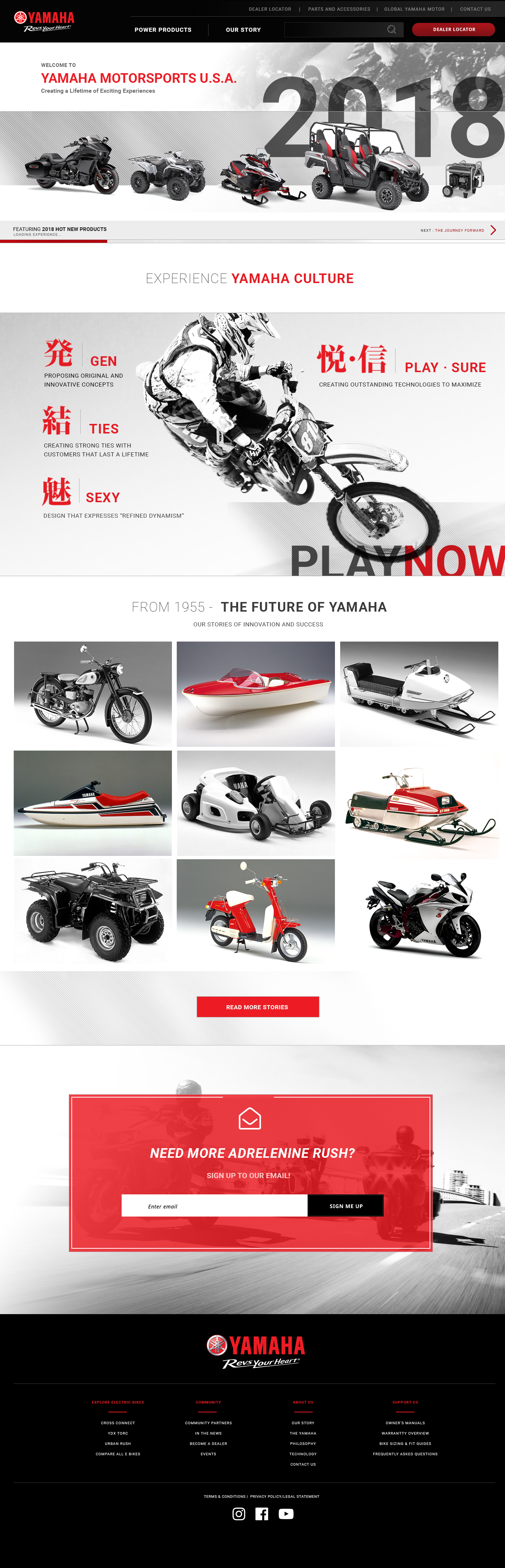
Yamaha’s Power Assist Bicycles launch in the U.S. needed more than a product page — it needed clarity. Most buyers were still learning what “assist” means, what to compare, and where to buy. I designed an education-first experience system: clean landing hierarchy, modular content units, and a path that moves customers from curiosity → confidence → dealer visit.
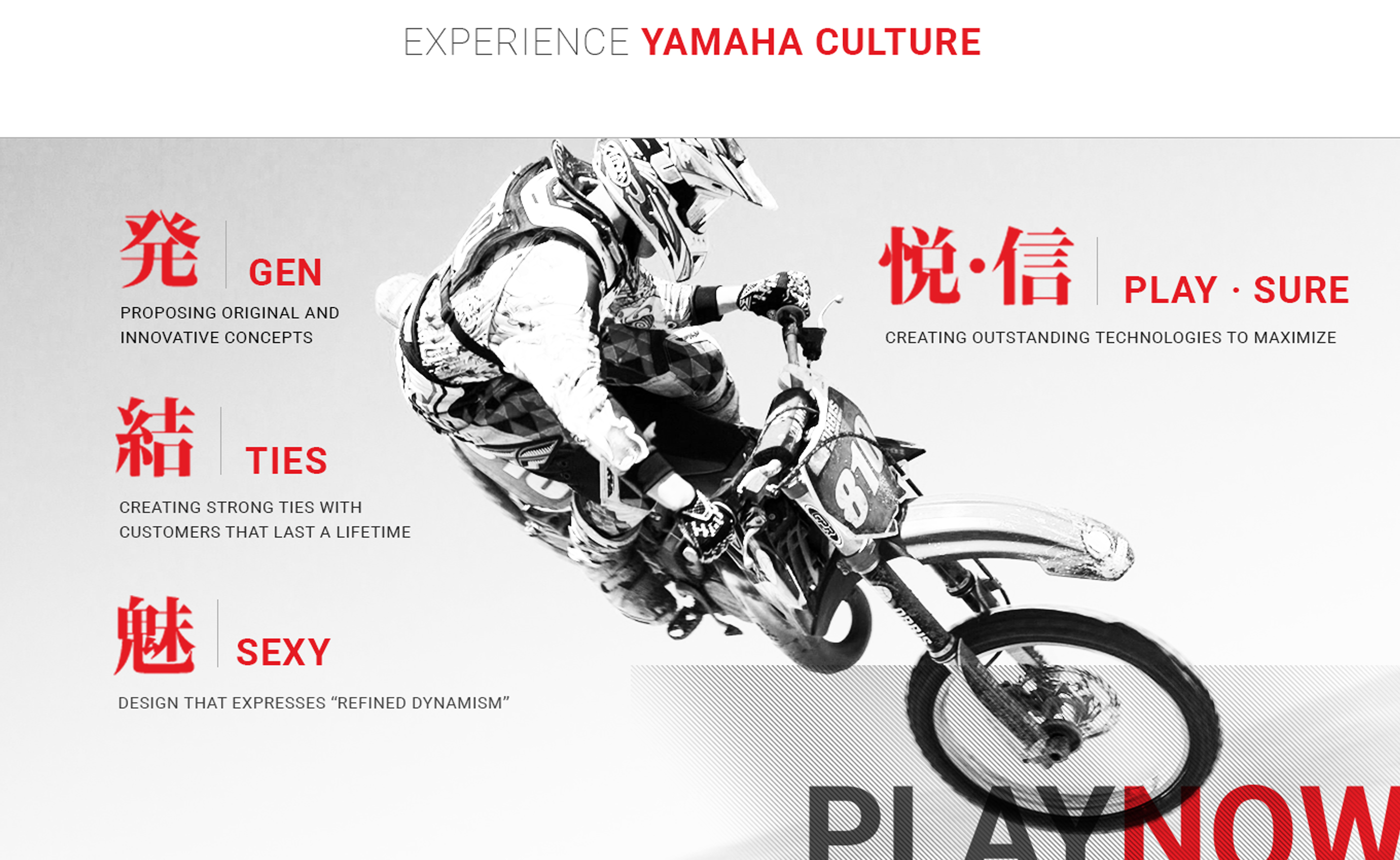
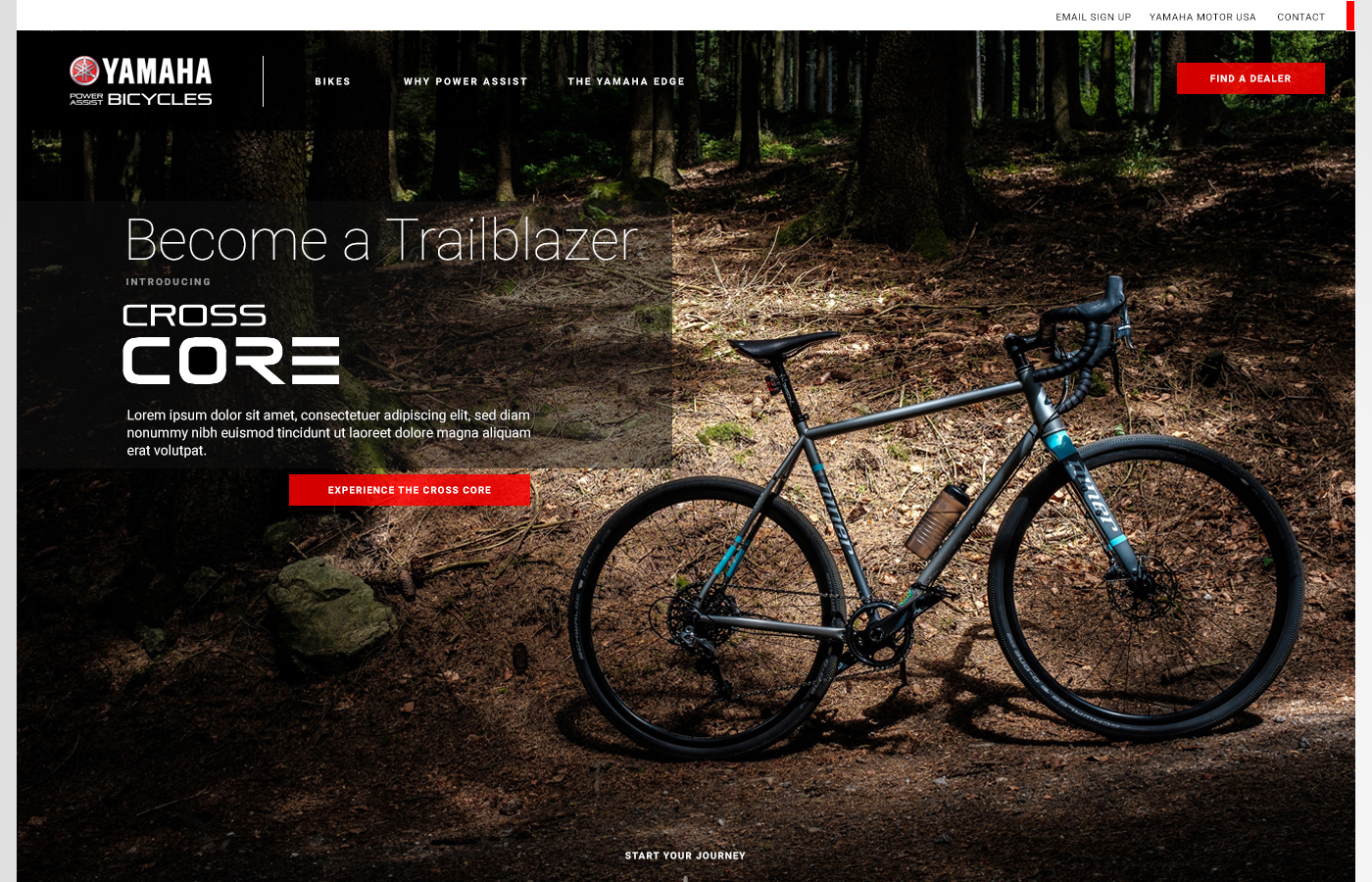
Launching a new category means answering questions before the customer has to ask them. The experience emphasized big visual units, simple navigation, and clear calls-to-action — while creating space for brand story, product stories, and conversion moments like dealer locator.
Designed a full-width, visual-first layout with replaceable “tile” modules so Yamaha could adjust messaging by season, model, or audience without redesigning the entire page.
Structured the experience around what different riders care about: brand trust and comfort, commuter practicality, couple-friendly validation, and enthusiast-level spec confidence.
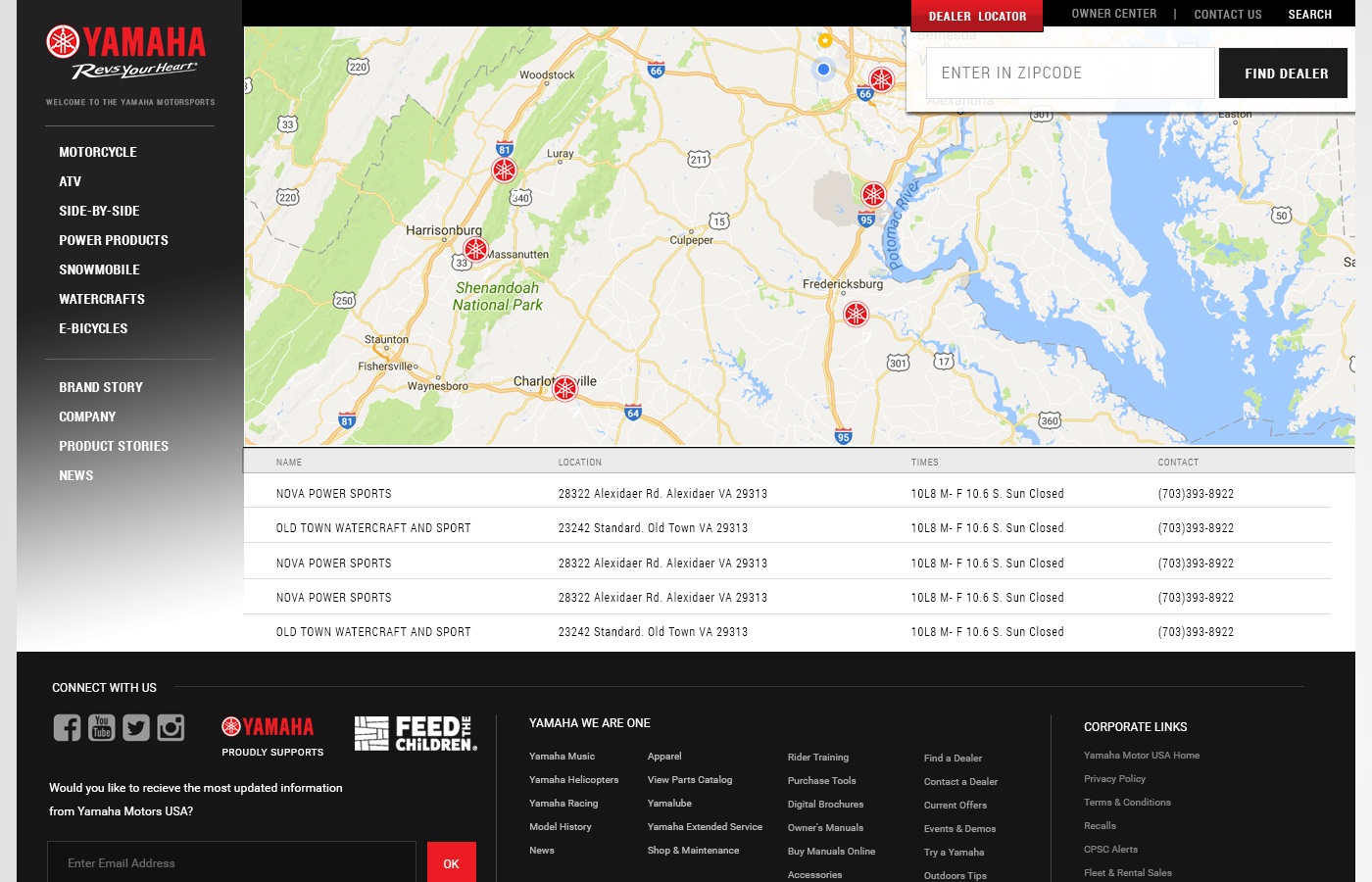
In a dealer-led purchase model, “where do I buy this?” is a primary CTA. The dealer locator experience needed to feel fast, obvious, and credible — not buried.
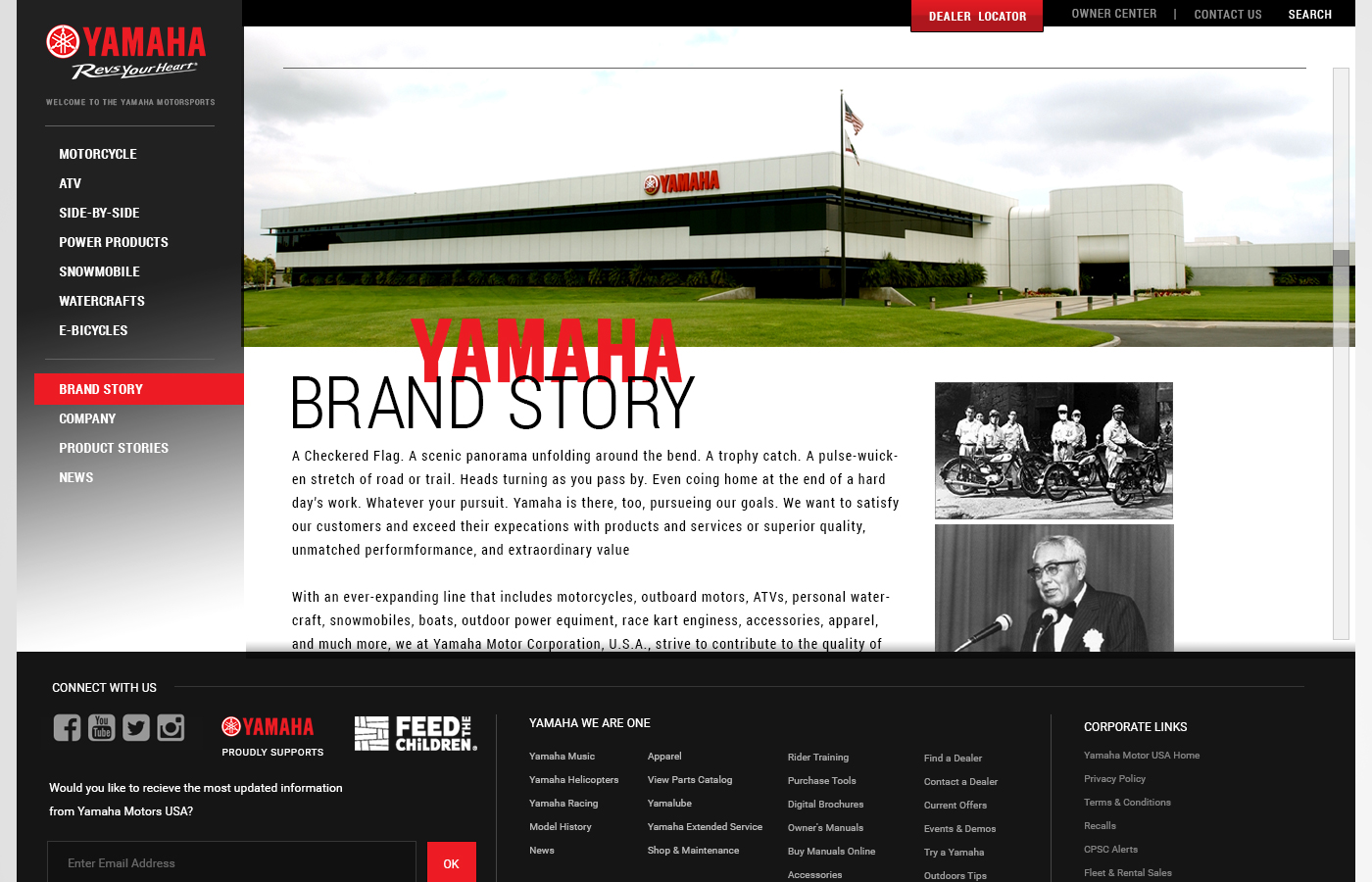
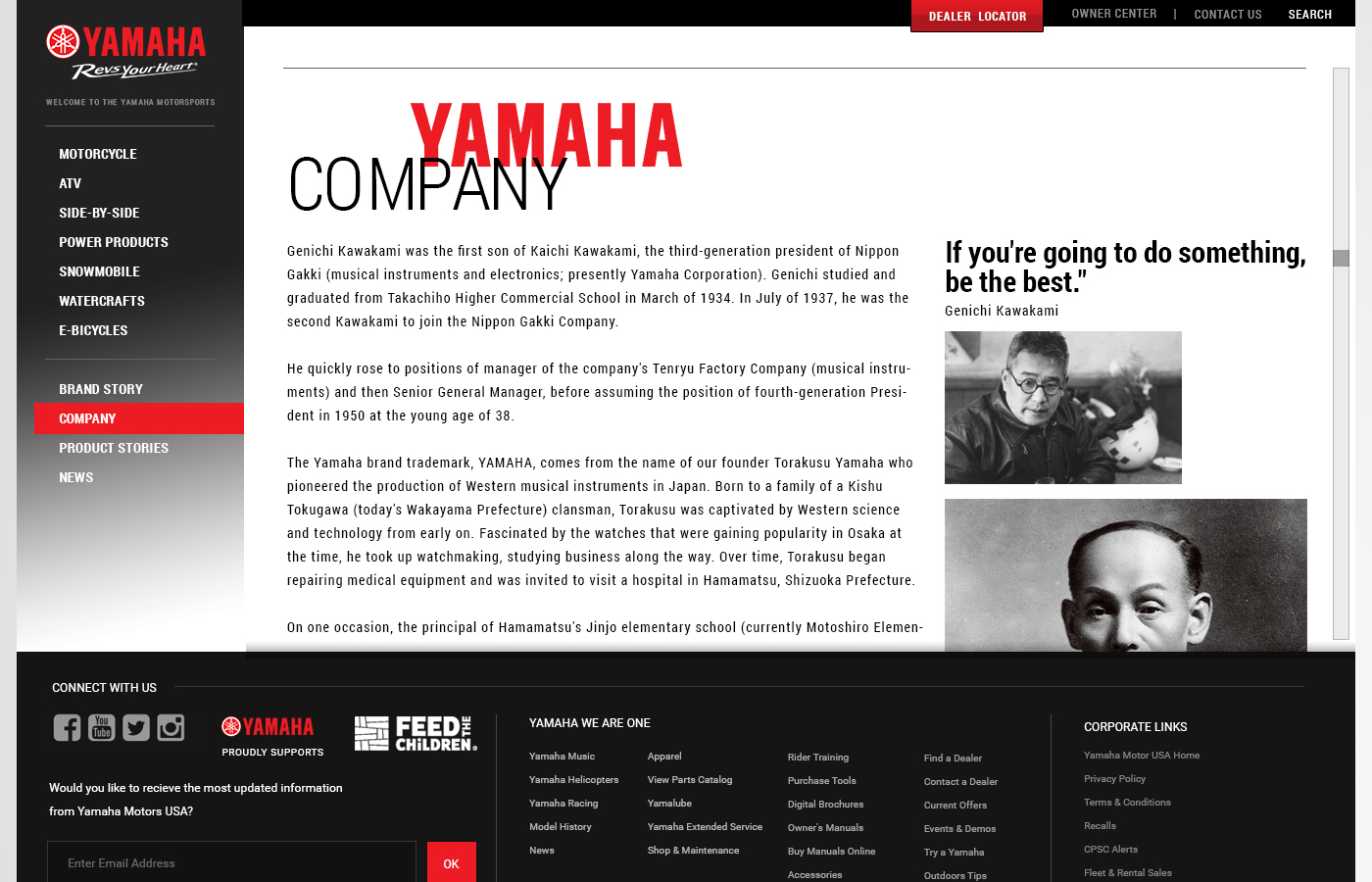
I approached the launch as a guided discovery journey: clear navigation, large visual storytelling units, and a structure that helps riders understand assist bikes without feeling like a spec sheet. The experience deliberately bridged brand confidence (heritage + story) with practical conversion (dealer locator).
The work prioritized clarity, trust, and conversion in a dealer-based purchase model — helping Yamaha introduce Power Assist Bicycles as a premium, legitimate category in the U.S.
Created a reusable page and content framework (global nav + modular units) that supports ongoing updates without breaking layout or CTA hierarchy.
Positioned dealer locator as a primary path — treating “where to buy” as a core experience moment and not a footer link.
This case study reflects launch-era experience work. Some details are summarized and shared at a high level.